QUESTION: What were the theatres or ‘playhouses’ of Shakespeare’s time like and how were plays staged in them?
During Shakespeare's time there were two different variety's of playhouse in London, outdoor playhouses(amphitheatres) and indoor playhouses known as ‘halls’ or ‘private’ playhouses.
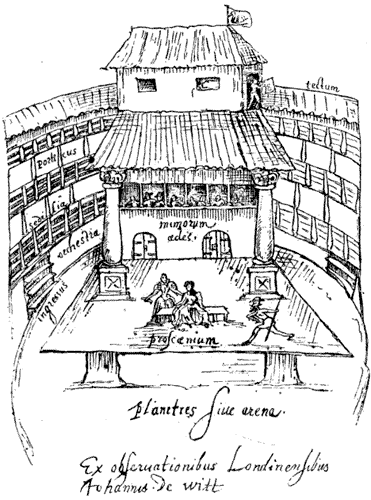 Often playhouses were built by rich businessmen who where willing to invest money into these buildings, as they saw a rising popularity of the touring acting companies. All outdoor playhouses included the following features:
• A central yard that was open to the sky
• A roof over the stage, which was called ‘the heavens’, although the first Rose theatre (1587-92) may not have had one
• A tiring house behind the stage with a backstage area, where actors dressed and waited to come on. Above this were lords’ rooms, rooms for storage, and a room level with ‘the heavens’ to work the special effects from
• Galleried seating all around the yard, on several levels, which was roofed.
• A tiring house behind the stage with a backstage area, where actors dressed and waited to come on. Above this were lords’ rooms, rooms for storage, and a room level with ‘the heavens’ to work the special effects from
• Galleried seating all around the yard, on several levels, which was roofed.
• A raised stage sticking out into the yard
Shows where normally put on in the afternoon to make use of the natural day light, the was very much relied on. Plays were performed in repertory, so the same play was never performed two days in a row. This also meant that actors would often be performing and playing many different characters in multiple shows all at one time, with very few rehearsals.
The Red Lion was built in 1567 by John Brayneand was the first playhouse to be built. This was originally an Inn, located in Stepney, outside the city walls. Although there is very little evidence as to weather this establishment was successful, what is clear it must have brought in some interest. As between the 1570's and the 1620's there where many more playhouses built all around the country.
Although there was a lot of attention around Playhouses and they drew in big audiences, not all of this attention was positive. The officials who ran the City of London thought that playhouses were disruptive, and where enticing for unwanted criminal behaviour. So people decided to build playhouses outside the city walls, where there wasn't the control of city officials.
QUESTION: Who were the actors of Shakespeare’s plays and how did the experience of being an actor differ from the experience today?
In Shakespeare’s time acting was an occupation only to be practised by boys and men, and although women were acting other places in Europe at the time, it wasn't until 1660 that women where allowed to perform in public theatres in England.So because of this, boys would play the female parts and occasionally men would play the older female characters.
It was common for actors to began their careers at a young age. They could take up apprenticeships at companies and be taught by the senior actors. It was expected for them to acquire skills in a verity of subjects, such as sword fight, singing, dance, as well as having a good memory for learning lines.


